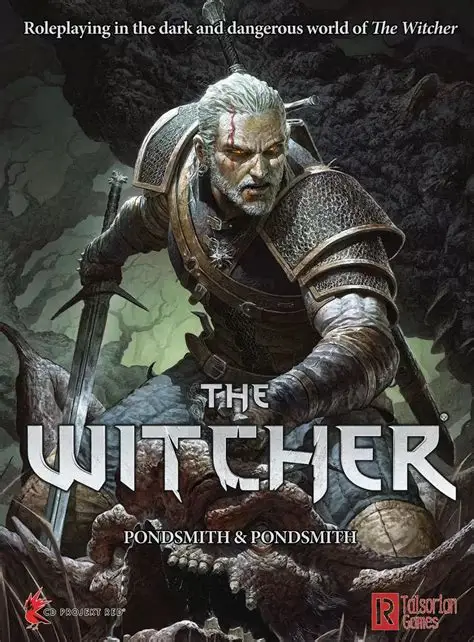
Opening the Tome
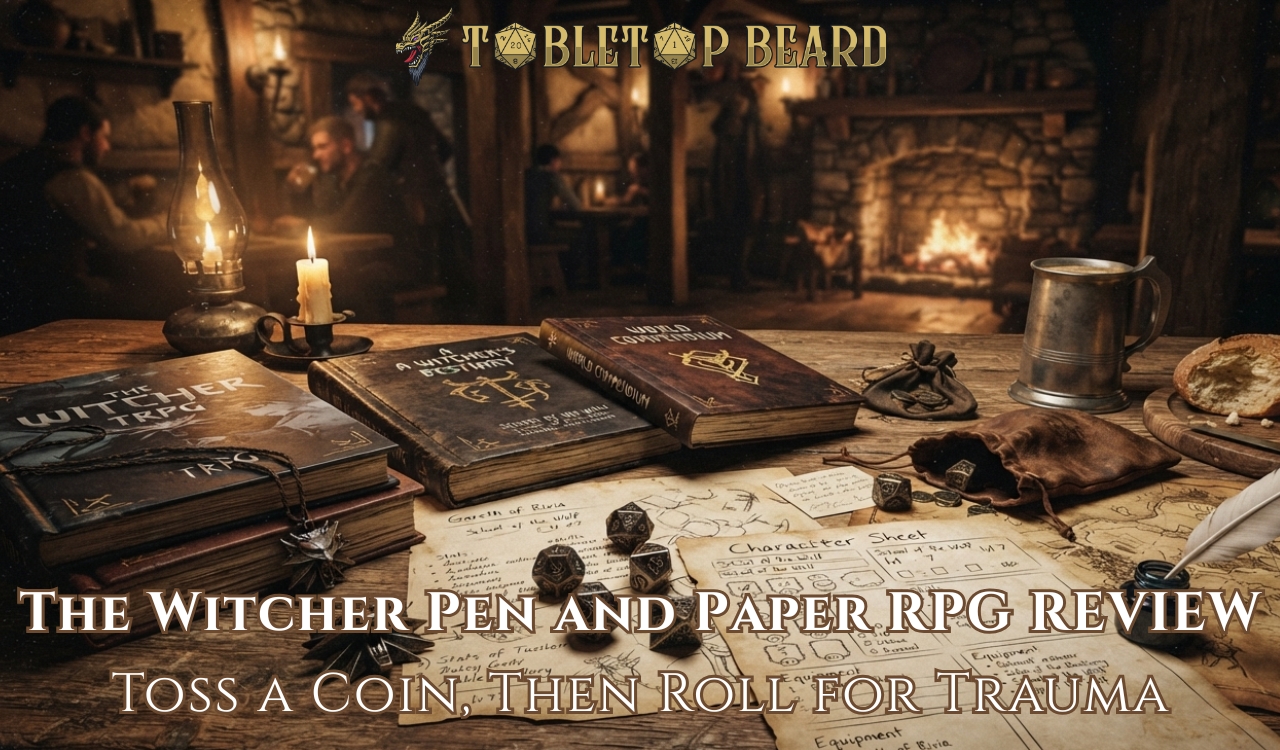
If your dream tabletop campaign involves muddy roads, suspicious villagers, philosophical monsters, political scheming, and at least one person shouting, “Wait, did anyone bring silver?” then The Witcher Pen & Paper RPG is very much sharpening its blade for you. Published by R. Talsorian Games in collaboration with CD Projekt Red, this is a tabletop RPG built to let players tell their own stories in the dark fantasy world of The Witcher, complete with professions such as Bards, Craftsmen, Criminals, Doctors, Mages, Men at Arms, Merchants, Priests, and Witchers, plus a bestiary of nasty things waiting in the fog.
This is not a breezy “kick down the dungeon door and collect the glowing loot” sort of game. It is more like a grim travel diary written by someone who survived by being paranoid, well prepared, and extremely lucky. The rules are detailed, the combat is dangerous, the world is hostile, and the fun comes from making hard choices with imperfect information. In other words: it feels very Witcher.
The Vibe: Mud, Monsters, and Moral Hangovers
The strongest thing about The Witcher Pen & Paper RPG is how confidently it understands its source material. The Continent is not treated as a generic fantasy map with a few Witcher names sprinkled on top. It is a place where race, war, superstition, class, magic, and money all grind against each other like rusty gears. A monster contract is rarely just a monster contract. There is probably a grieving family, a lying mayor, a cursed battlefield, a hungry village, or a perfectly reasonable creature with an unfortunate appetite involved.
For a Game Master, that is pure catnip. Every adventure can begin with something simple — a missing child, a strange corpse, a string of livestock deaths — and then twist into investigation, negotiation, combat, and consequences. For players, it means the game rewards curiosity as much as swordplay. The most entertaining table moments often happen before anyone draws steel: haggling over coin, arguing over whether the “monster” deserves to die, or realizing that the charming noble is roughly as trustworthy as a debt collector.
Character Creation: A Backstory Generator With Teeth
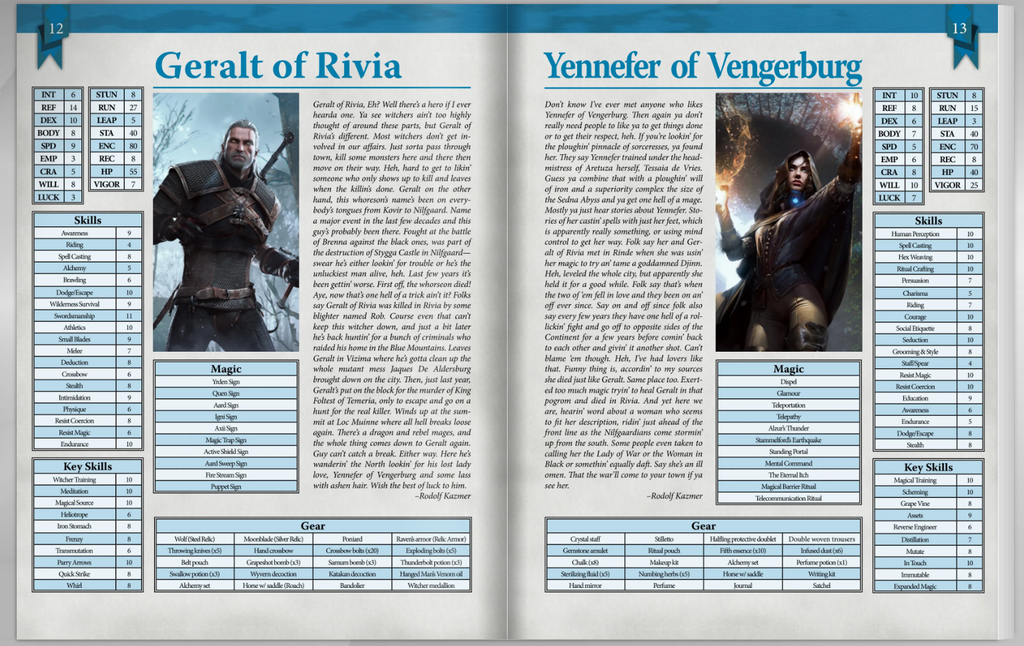
The game’s Lifepath system is one of its most flavorful features. Instead of beginning play as a blank heroic résumé, your character arrives with history: family complications, enemies, allies, tragedies, debts, and awkward emotional baggage. This is exactly the sort of machinery a Witcher game needs. Nobody on the Continent should walk into session one with a clean slate and healthy coping strategies.
The professions also do a good job of widening the fantasy beyond “everyone waits while the Witcher does the cool part.” Witchers are obviously iconic, but Doctors, Craftsmen, Bards, Merchants, and Criminals all have practical ways to matter. A good Doctor can be the difference between “scarred but alive” and “new character sheet.” A Merchant can turn contacts and coin into leverage. A Bard can talk the party out of trouble, or into a more interesting kind of trouble. The result is a game that can support monster-hunting crews, war stories, political intrigue, traveling caravans, criminal capers, and grim medical drama with equal enthusiasm.
The Rules: Crunchy, Tactical, and Proud of It
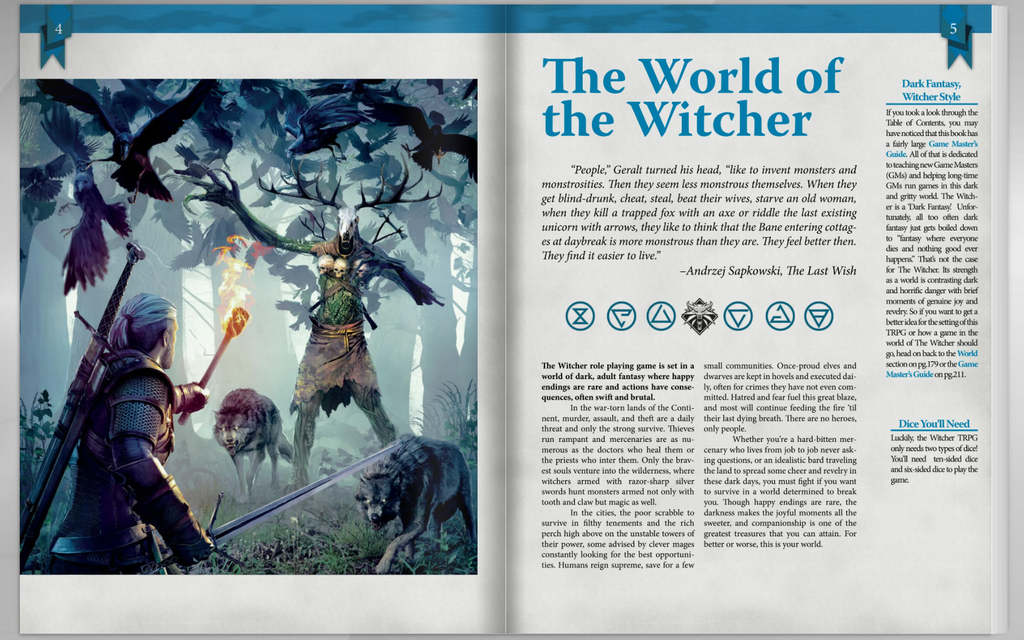
Mechanically, this is a d10-based system with a lot of moving parts. It cares about stats, skills, gear, positioning, preparation, armor, wounds, stamina, magic, crafting, alchemy, and the many exciting ways a person can discover that knees are important. If your group likes sleek, rules-light storytelling where combat resolves in a handful of abstract rolls, this game may feel like being handed a crossbow manual during a bar fight. If your group enjoys tactical detail, gritty consequences, and the delicious terror of meaningful dice rolls, it can be a feast.
The game’s combat is especially committed to making violence feel risky. Bad decisions can lead to critical wounds, destroyed armor, broken limbs, bleeding, stunning, and that unique tabletop silence that follows when a player asks, “How bad is ruptured organs?” This is one of the system’s best design choices. Combat is not filler. It is a decision. Drawing a blade should feel like stepping onto thin ice while someone plays a lute ominously in the background.
Magic, Crafting, and Monster Prep
The Witcher fantasy is not just about swinging swords at horrors in the woods. It is about knowing what the horror is, what it fears, what it eats, and whether you should be paid extra for dealing with it in the rain. The RPG leans into this beautifully. Alchemy, crafting, spellcasting, invocations, and monster lore all create a satisfying loop: investigate, prepare, negotiate, strike, survive, complain about the payment.
For players who love equipment and planning, this is where the system sings. Oils, bombs, traps, armor repairs, decoctions, and specialized gear make monster hunts feel like operations rather than random encounters. A werewolf is not just a bag of hit points with a fur texture; it is a problem to research, exploit, and hopefully not be eaten by. That said, the density can be intimidating. A table that ignores preparation will miss a lot of the game’s intended rhythm, while a table that loves prep will have a grand time turning every contract into a grim little heist.
Running the Game: Great Ingredients, Slightly Heavy Cookware
For Game Masters, the core book provides a strong toolbox: lore, monsters, professions, gear, magic, and enough dark-fantasy texture to make even a roadside inn feel like it has a tragic secret in the cellar. The setting practically writes adventure hooks for you. A cursed battlefield? A noble succession dispute? A village blaming elves for something a monster actually did? A monster blamed for something humans did? All of these are instantly on-brand.
The challenge is usability. The rules have weight, and the GM needs to be comfortable adjudicating subsystems without letting the session bog down. The first few combats may involve page-flipping, rules checking, and players discovering that “I attack” is not quite as simple as they hoped. Once the table internalizes the flow, though, the system can produce tense, memorable scenes. It rewards a GM who enjoys consequences, complications, and letting players talk themselves into disasters with excellent comic timing.
What Works Best
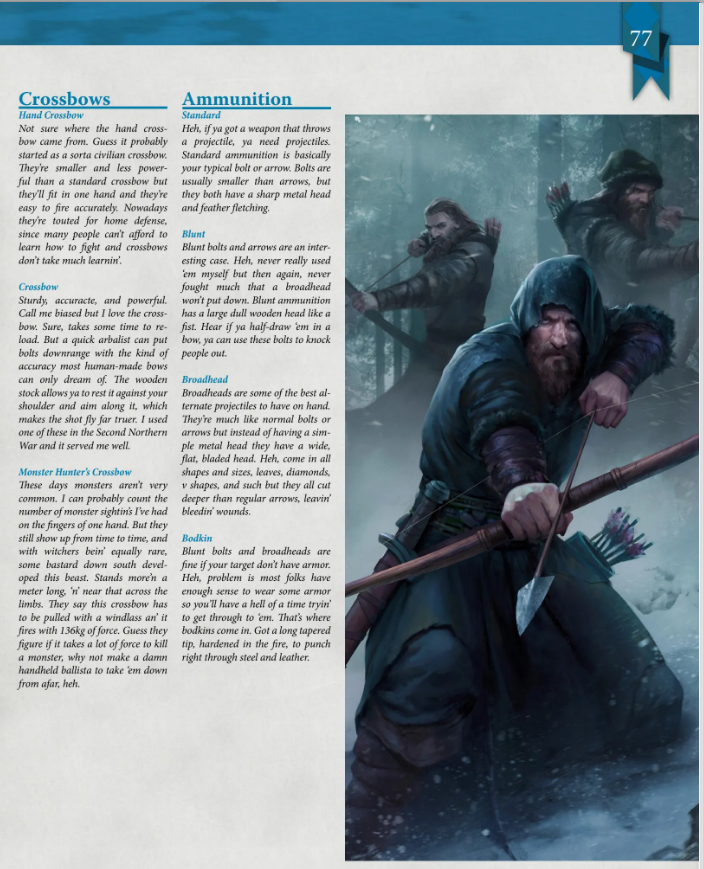
- It captures the Witcher tone. The game understands that contracts, politics, prejudice, war, monsters, and money all belong in the same stew.
- Combat feels dangerous. The wound and critical systems make fights suspenseful instead of routine.
- Lifepath creation creates instant drama. Characters start with baggage, and baggage is fuel.
- Non-Witcher professions matter. The party can be more than one silver-haired problem solver and several spectators.
- Preparation is fun. Researching monsters, crafting tools, and choosing tactics makes hunts feel earned.
What May Send You Back to the Tavern
- It is crunchy. Some players will love the detail; others may feel like they are being audited by a sorceress.
- Combat can slow down. Hit locations, armor, criticals, stamina, and modifiers create drama, but they also demand attention.
- The setting is specific. This is not the easiest system to reskin into cheerful high fantasy or kitchen-sink adventure.
- Balance can be table-sensitive. Witchers are meant to feel exceptional, which is flavorful, but groups should discuss spotlight sharing.
- New players may need guidance. Character creation and tactical play benefit from a patient GM and clear cheat sheets.
Who Should Play It?
The Witcher Pen & Paper RPG is best for groups who want dark fantasy with teeth. If your table enjoys investigation, moral ambiguity, tactical combat, resource management, and characters who look increasingly haunted every time they update their inventory, this is a strong pick. It is especially good for players who love the Witcher novels, games, or show and want to explore the Continent from street level rather than simply orbiting Geralt’s legend.
It is less ideal for groups looking for fast, cinematic, minimal-rules fantasy. You can absolutely tell dramatic stories here, but the machinery wants to be used. The game is at its best when players care about the difference between silver and steel, when bargaining matters, when wounds linger, and when nobody assumes the monster is the worst person in the room.
Final Verdict
The Witcher Pen & Paper RPG is a flavorful, ambitious, satisfyingly brutal tabletop adaptation that knows exactly what it wants to be. It is not the smoothest horse on the Path, and it sometimes carries more rules gear than it strictly needs, but when it works, it delivers fantastic dark-fantasy roleplaying: tense hunts, messy choices, dangerous fights, and the thrilling realization that the real monster may be bureaucracy.
We love all sorts of games at Tabletop Beard. That being said, we recommend this one for Witcher fans, tactical fantasy players, and anyone who thinks a good adventure should include research, scars, and at least one morally suspicious village elder.
-Tabletop Beard